California proposes mandatory AI checks and shutdown powers
Recommendations call for state-set AI standards, independent verification and emergency shutdown powers; the release does not enact those measures.
Governor Gavin Newsom’s office released recommendations on November 18, 2026, for mandatory AI safety standards, ongoing independent checks and state authority to order emergency model shutdowns. The governor’s announcement proposes a stronger California oversight framework; it does not enact those requirements.
California proposes mandatory standards and shutdown authority
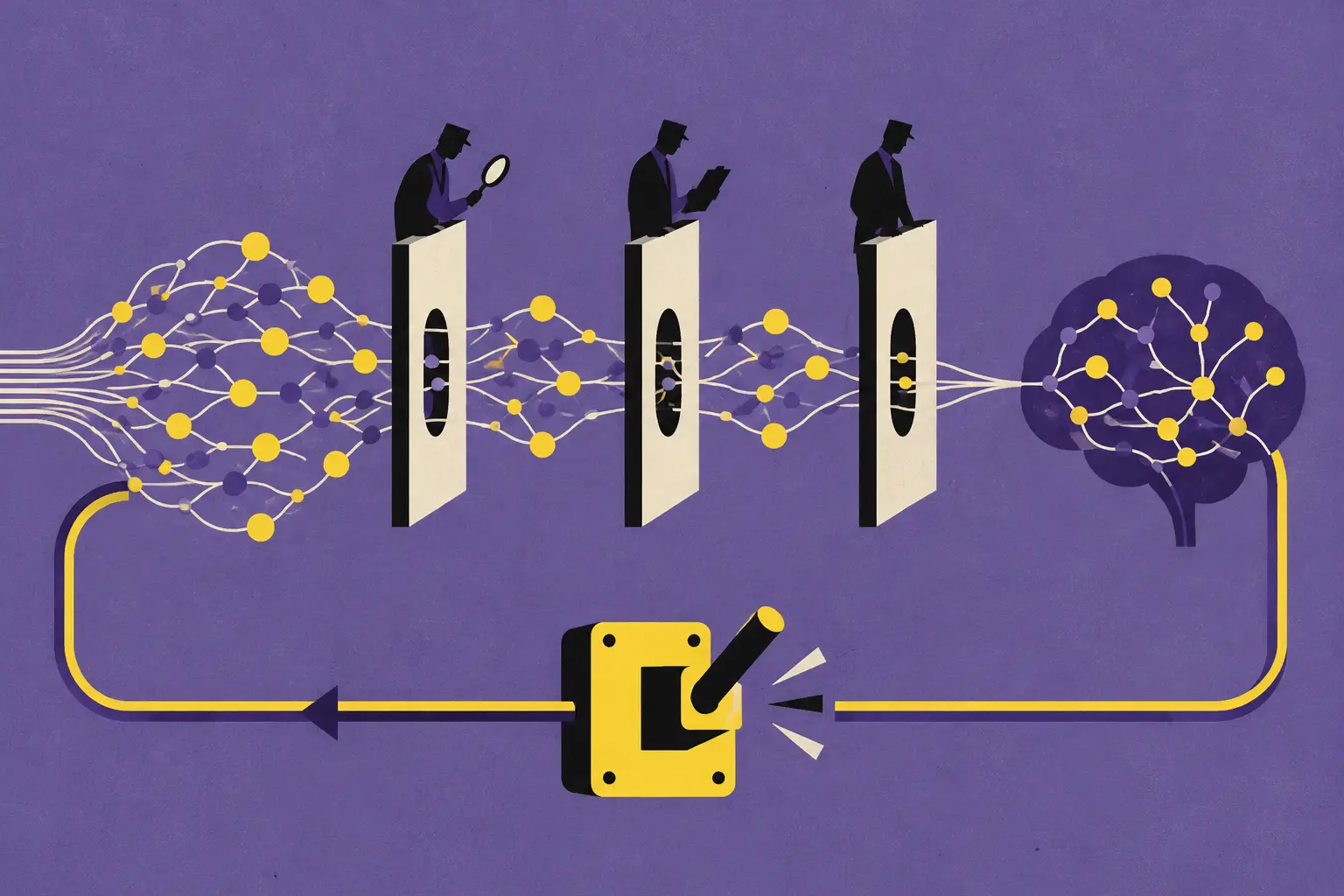
The recommendations would put the state, rather than developers, in charge of setting baseline safety standards for all AI companies. They also call for expanded incident reporting and verified risk-containment protocols, backed by authority to order an immediate shutdown in an emergency.
The Government Operations Agency’s AI Safety in 2026 and Beyond, dated November 16, 2026, recommends legislative changes. According to the report, existing SB 53 requires frontier AI developers to establish and follow safety plans, report critical safety incidents and protect whistleblowers. The proposed framework would go beyond that developer-led planning model.
The administration also seeks authority to cap the development and use of recursive self-improvement. The announcement describes this as AI designing its own successor without human input. That proposal targets the development process itself, not just the safety of a finished model.
Independent oversight across the model lifecycle
Independent safety testing and verification would extend through model training, development and deployment. The proposal calls for ongoing oversight throughout those stages. State-set standards would define the baseline, while outside verification would test whether developers meet it throughout the model lifecycle.
Reporting timelines would also tighten. Law Commentary reported on November 19 that most critical safety incident reports would be due within 48 hours, rather than 15 days. The existing 24-hour deadline for imminent catastrophic risks would remain.
What it means
For hyperscalers developing frontier models and other AI developers, the central change would be a transfer of authority over the safety baseline. Writing and following an internal plan would no longer be the sole organizing principle: companies would have to demonstrate compliance with state-set requirements to independent evaluators.
The lifecycle scope matters operationally. Training teams, model developers and deployment operators would all fall within the proposed verification process. Verified containment protocols would also make the ability to stop a model part of safety compliance, rather than leaving emergency intervention entirely to the developer.
The recommended standards and shutdown powers are proposals for legislative action, not requirements enacted by the announcement. For industry planning, the signal is a shift toward continuous external scrutiny of both how models are built and how they operate after deployment.